
Your Website Should Keep Working as Your Business Changes
A business changes a lot faster than most websites do. We've experienced this many times over the years.
A company may add a new division or sharpen its positioning. It may start selling something new or leadership may begin talking about the business in a different way because the business is quietly transformed in the background.
But oftentimes websites lag behind these changes and the front doors start introducing people to an outdated version of the business.
This gap creates real consequences for companies. The website is still most often the front door to accessing what your business stands for and what it provides. It's where prospects, partners, recruits, and existing customers go to figure out what the business is, what it does, and whether it feels trustworthy. Whatever the business has become in the background, the front door introduces people to a digital, often stale, representation.
I think this is one of the quiet ways businesses create drag for themselves.
The website probably still works. Nothing is technically broken. The forms submit successfully. The pages load, maybe even quickly. But it isn't built to support the changing nature of the business. A new initiative is harder to explain than it should be. A new division feels patched on. Teams start working around the site instead of through it. The business is moving, but the website is stagnant.
We've come to believe a website should keep working as the business changes. It's a simple thing to say that is pretty hard to pull off well. It takes a digital partner who keeps a finger on the pulse of the business, understands what is actually changing, and can turn that change into clear digital execution without making every change feel like a massive undertaking.
It also takes the kind of relationship where we work like the outcome belongs to us, too.
We're proud to have many examples of these types of relationships. One is our long-term partnership with OMB.
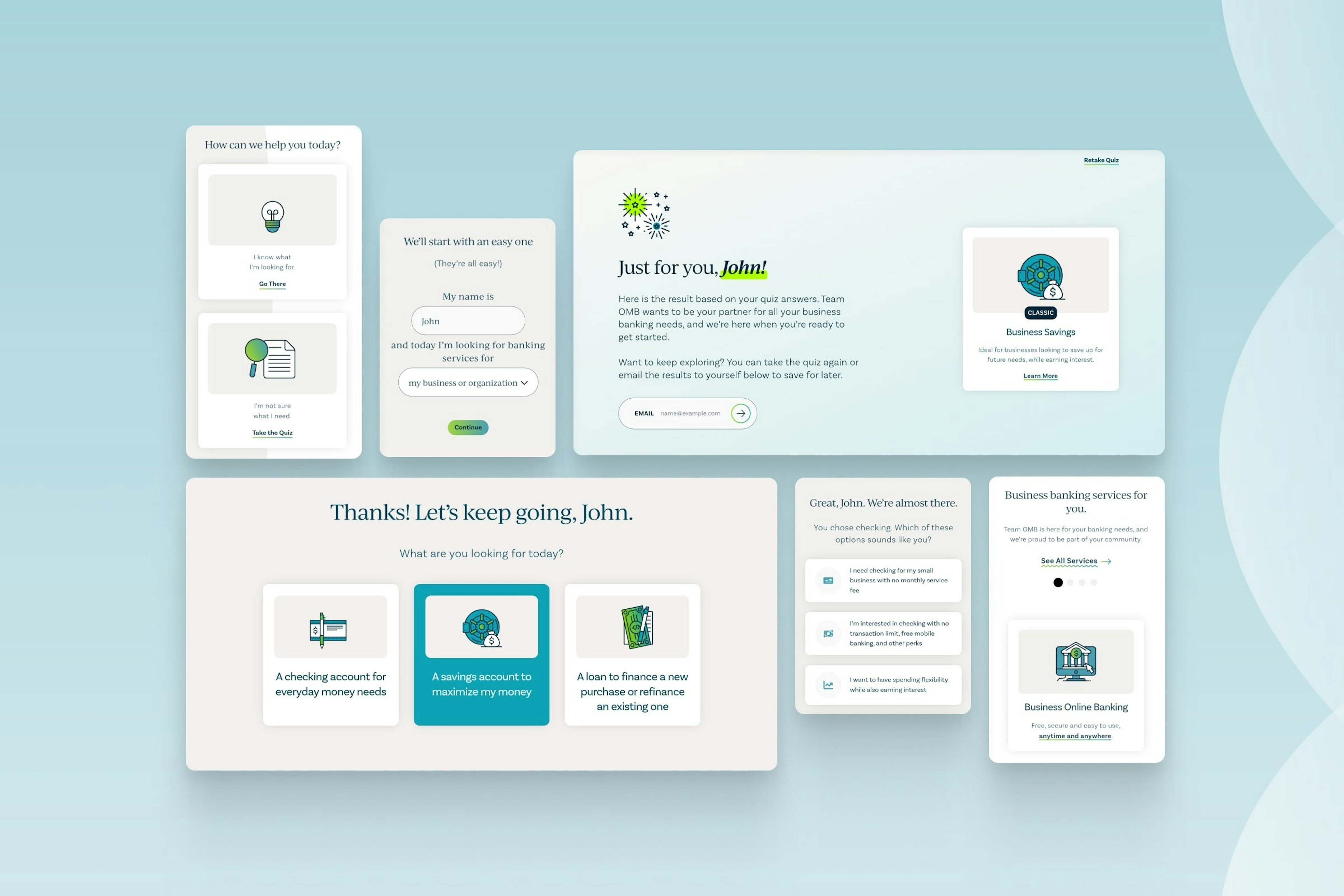
We started our relationship through strategic planning where we helped them set and be accountable to their high-level vision as an organization. Then we were brought in to support their website overhaul with a focus on coming out of that effort as industry leaders. We accomplished both, coming out of the web work with the 2022 ABA Brand Slam Award for Website Redesign (which was a stated goal of OMB). The new website represented the bank they were becoming.
But the most impactful part of our relationship came later.
OMB is not a company to stand still. Mark Harrington, their CEO, is an ambitious person who will not settle. The business kept growing, evolving, and adding new offerings to their customers. The first addition was OMBX, their embedded finance division. This wasn't as simple as adding a new page. It was an entirely new business offering that needed to be legible to their new market. The website needed to keep up and it needed to do it fast, with a multi-site approach supporting subbrands.
Next up was OMBI. Another new audience and service line with a different expression of the broader OMB business and OMBX. Because of our work on the previous website and the multi-site functionality, we were able to move fast to meet their new need.
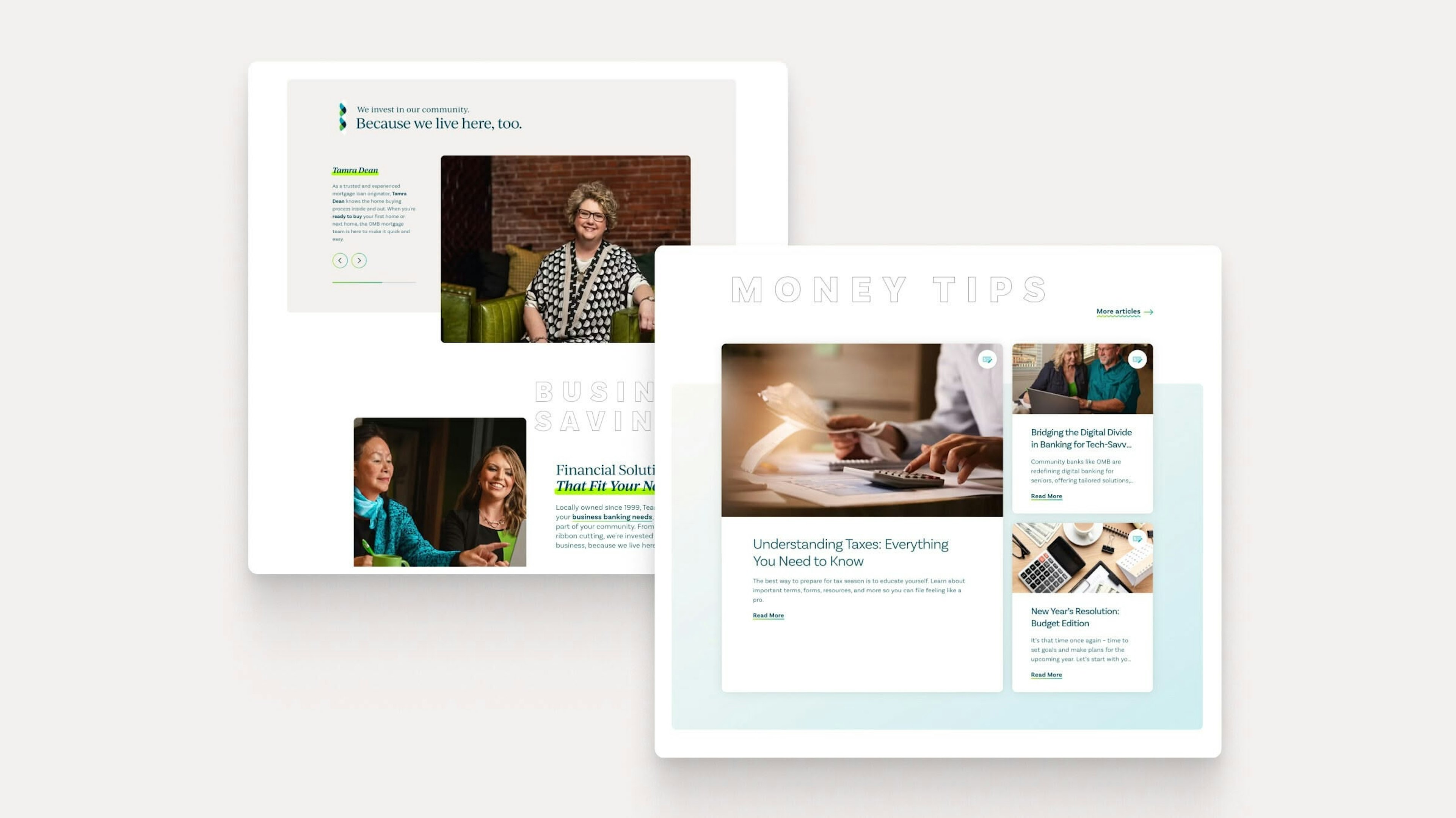
We don't view these as three separate projects for OMB, OMBX, and OMBI. Rather, we see one relationship adapting through the natural evolutionary paths businesses take.
The first phase built the foundation. The second proved that foundation could stretch to support a new division. The third proved the relationship and the system could adapt again when the business changed again. That's a much better test of website work than winning an award when it launches (but that also feels good).
That's where a lot of website projects fall apart. They were built to get across the finish line. They weren't built to keep telling the right story as the company changed.
The best long-term partnerships should feel different. They allow businesses to stay close enough to clearly notice when the story needs to change. They have enough strategic context to understand why that change matters, and they have enough execution discipline to make the updates without it turning into something much larger than it is.
And that's what many of our clients buy when they hire us. Not just the initial website, but the ongoing relationship that will ensure that we continue working for them well beyond the initial launch.
Holloway America was our first client in 2010, and they're still part of our story. We've worked with CoxHealth since 2013 on a wide variety of projects. The work becomes more aligned over time because we stop guessing from a distance. We understand their business better. We see the strategic nature of their decisions. And when it's time to make those decisions visible, we can do it faster with higher accuracy and a lot less friction for our clients.
Businesses change. They should. That's kind of the whole point.
The website can't be the part that gets left behind.