
What We Get Wrong When We Talk About Generations at Work: Part One
Talk of generations at work is everywhere. A quick online search will produce articles claiming to know everything from “What Millennials Really Want at Work” to “Why Baby Boomers Can’t Get Along with Generation Z.”
There’s plenty of reason for there to be so much talk about today’s multigenerational workplace and what it means for managers. Most organizations now have members of four distinct generations working together, leaving managers to figure out how to maximize the most generationally-diverse workplace ever. And it’s no small task. Seventy-five percent of managers say managing multigenerational teams is a challenge, and nearly 80% of LiveCareer’s survey respondents say it’s difficult to have someone younger than them as a supervisor.
Accordingly, we’ve developed a series of three articles focused on the key things managers and team leaders need to know in order to effectively manage multigenerational teams. Part one will focus on the ways members from each generation are alike at work, and parts two and three will offer insight into the most common challenges faced by multigenerational teams as well as best practices for managing them.
What’s Missing From the Conversation?
Many of us are quick to paint generations (and their suggested differences) with a broad brush. Too many suggest management tactics that focus on generational differences, inadvertently reinforcing these differences and pushing our team members apart rather than bringing them together.
What’s missing is a consideration for the significant and meaningful ways team members from each generation are alike at work.
How Different Are We, Really?
While it doesn’t make for tantalizing headlines, the evidence suggests our multigenerational team members have more in common than those Google search results would lead us to believe.
We share values:
Looking at the importance of six traits in a potential employer: ethics, environmental practices, work-life balance, profitability, diversity, and a reputation for hiring the best and brightest: CNBC found that preferences are largely about the same across the four generations working today.
We share goals:
IBM’s Institute for Business Value discovered that scores were essentially uniform across multigenerational employees when asked about individual career goals, such as “I want to make a positive impact on my organization.”
We share preferences:
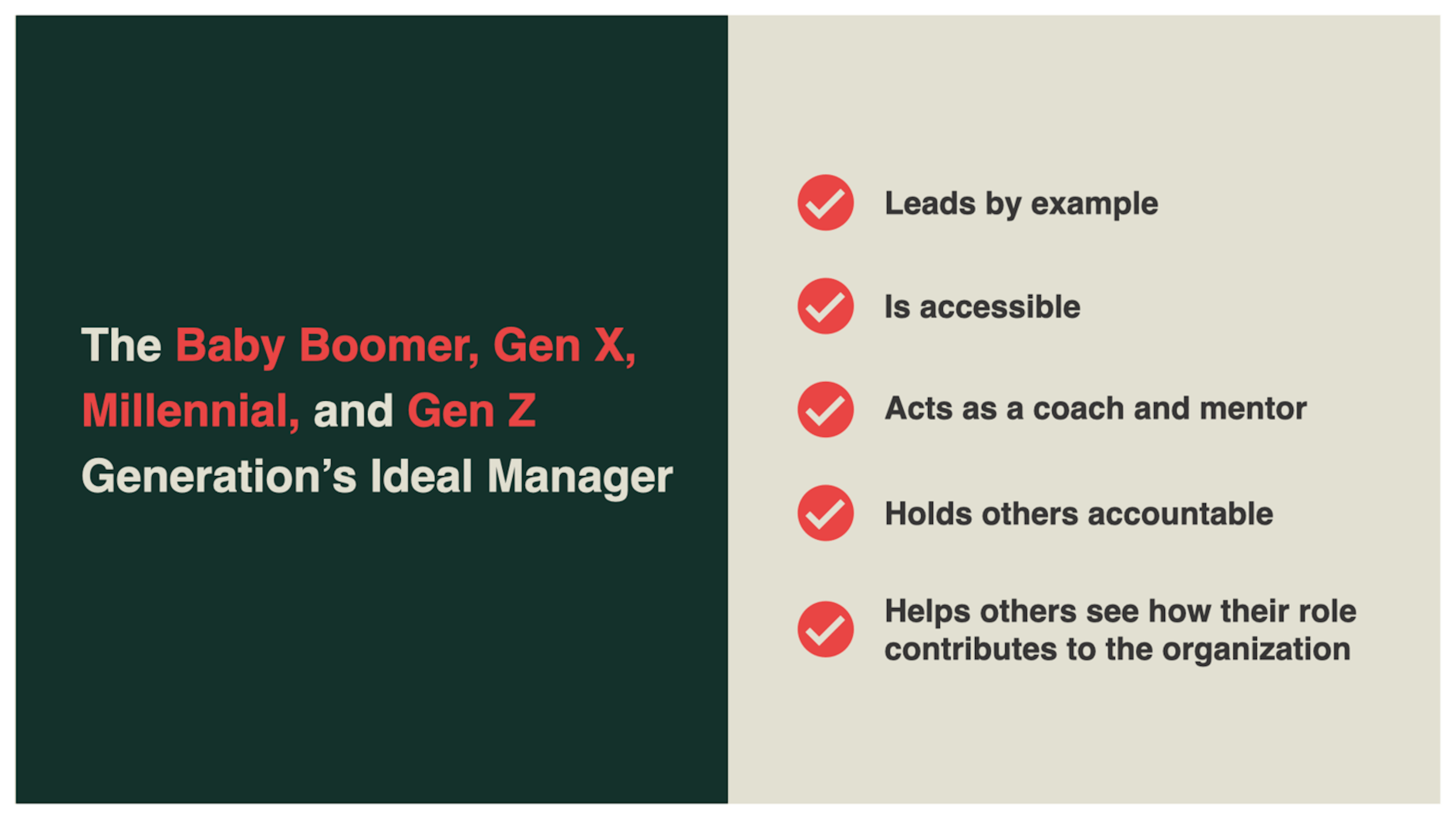
When asked to describe their “ideal manager,” employees across generations largely select the same five traits. Baby Boomers, Generation X, Millennials, and Generation Z say they want a manager who:
- Leads by example
- Is accessible
- Acts as a coach and mentor
- Holds others accountable
- Helps others see how their role contributes to the organization
We share concerns:
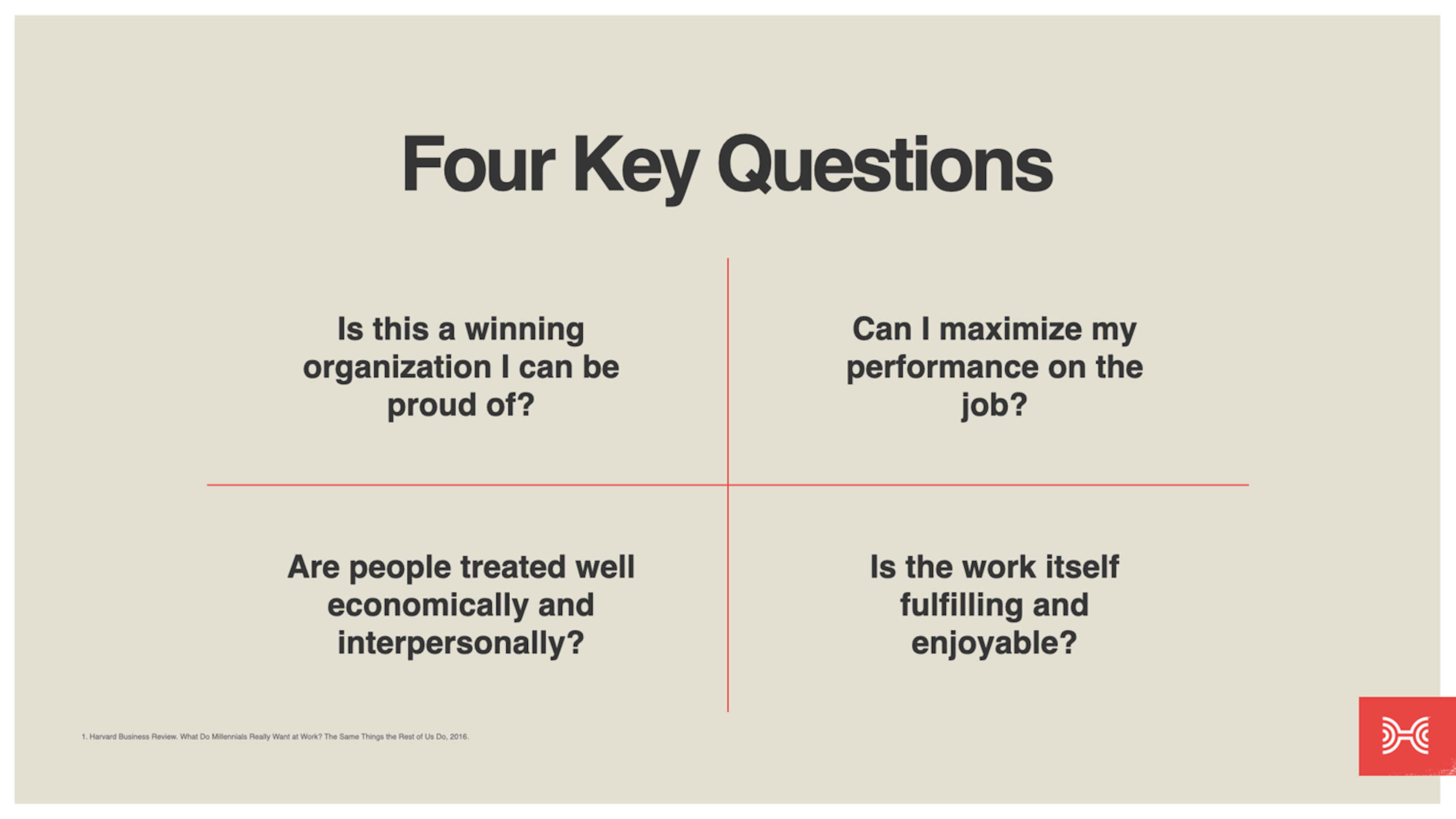
Regardless of age, studies find that employees ask themselves the same four questions when deciding whether to join (or stay with) an organization. The top concerns?
- Is this a winning organization I can be proud of?
- Can I maximize my performance on the job?
- Are people treated well economically and interpersonally?
- Is the work itself fulfilling and enjoyable?
And to top it all off: We like working together! Research from LiveCareer found that 89% of employees consider generational diversity to be a positive element of their workplace.
What Now?
All of this begs the question: If members of different generations fundamentally want and value the same things at work, why is managing multigenerational teams such a persistent workplace challenge?
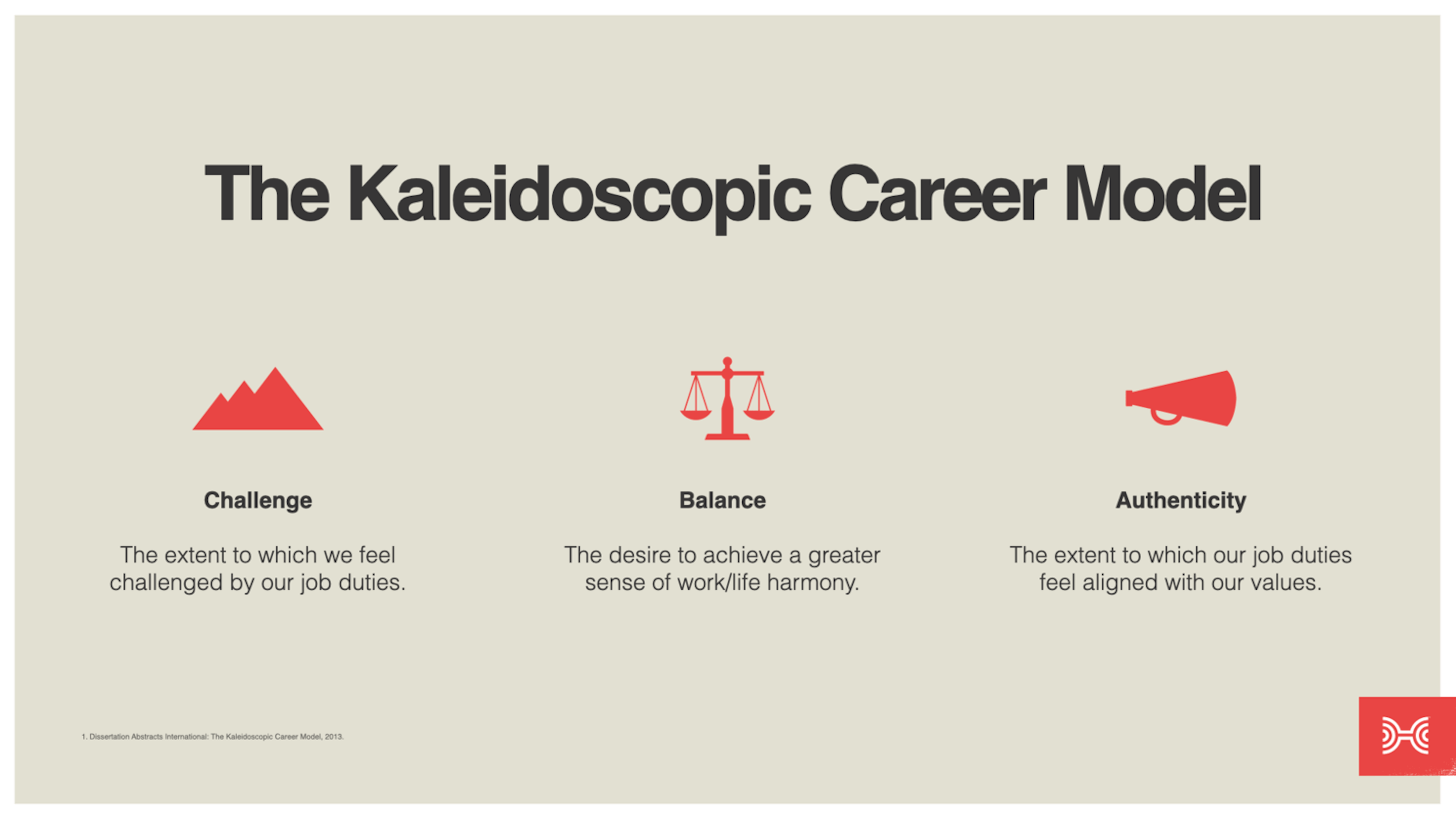
The answer calls for managers to consider factors like an employee’s life stage rather than simply their age. Members of all generations care about similar things, but their priorities shift over time. The Kaleidoscopic Career Model illustrates this.
The Kaleidoscopic Career Model explains that fundamentally, most employees want a sense of challenge, balance, and authenticity in their work. The one (or two) elements an employee desires the most out of these three elements will change over time, much like a kaleidoscope creates a changing scene. Employees often crave a sense of challenge above all else when they are early in their careers. As they become more established in work (and life), many find themselves placing a higher priority on balance. Lastly, employees nearing the end of their time in the workforce may desire a deep sense of authenticity, or feeling like their final working days are being spent in a way that aligns with their values.
The hard truth? Managers and organizations must be like kaleidoscopes themselves, constantly shifting and adapting to effectively work across today’s multigenerational workforce. Understanding your team members, their unique perspectives, and their desired blend of challenge, balance, and authenticity requires strong relationships and ongoing communication.
It’s easy to only focus on what makes us different from one another. The most effective managers will commit to first understanding and appreciating the ways we’re alike.
Did you find this useful or interesting? You’re in luck! We’ll be sharing parts two and three soon, focused on the common challenges of and recommended solutions to generational differences at work.
Sources
- The University of North Carolina. A Guide to Leading the Multigenerational Workforce, 2015.
- LiveCareer. Different Generations in the Workplace Study, 2022.
- Harvard Business Review. What Do Millennials Really Want at Work? The Same Things the Rest of Us Do, 2016.
- CNBC. Millennials Not So Different When it Comes to Work: Survey, 2015.
- IBM Institute for Business Value. Myths, Exaggerations and Uncomfortable Truths, 2015.